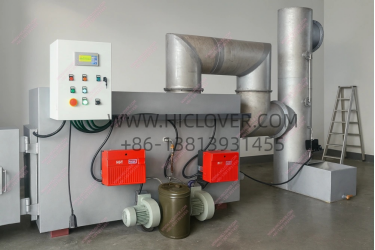
Egypt Waste & Medical Waste Incinerator Market Report
Strategic Review Across Cairo, Giza, Alexandria, Suez, Port Said, Aswan
1. Egypt context: why incineration remains a critical pillar
Egypt is one of Africa’s largest and most complex waste markets. With a population exceeding 100 million, dense urban corridors along the Nile, and rapidly expanding healthcare and industrial sectors, Egypt faces simultaneous pressure from volume, regulation, and public health risk.
Waste generation and institutional demand are concentrated in:
-
Cairo and Giza – mega-urban healthcare clusters, ministries, laboratories
-
Alexandria – coastal metropolis, port, petrochemical and industrial zones
-
Suez and Port Said – canal logistics, industrial parks, port services
-
Aswan – southern regional hub with hospitals and public institutions
In Egypt, incineration is not a replacement for landfill or recycling. It is a targeted solution for medical waste, hazardous institutional waste, and specific solid waste streams that require secure destruction.
2. Structural characteristics of the Egyptian incinerator market
A. Strong regulatory and policy influence
Egypt has progressively tightened controls on medical and hazardous waste, particularly in large cities. Projects are increasingly shaped by:
-
national health regulations,
-
environmental authority oversight,
-
donor and international framework requirements.
B. Scale disparity across regions
While Cairo and Alexandria require higher-capacity and better-documented systems, many secondary cities and institutional sites need compact, decentralized solutions. This creates a dual market:
-
fixed installations in large urban hospitals,
-
mobile or containerized incinerators for regional and project-based use.
C. Infrastructure variation
Reliable grid power is not universal, especially outside major cities. As a result, diesel-fired incinerators with autonomous operation remain highly relevant across Egypt.
3. City-based demand analysis
Cairo & Giza – Healthcare density and institutional demand
As Egypt’s core healthcare zone, Cairo and Giza host:
-
national referral hospitals,
-
teaching hospitals and laboratories,
-
ministries and regulatory bodies.
Incinerators here are primarily used for:
-
infectious medical waste,
-
pharmaceutical destruction,
-
secure institutional waste handling.
Projects associated with international institutions typically require dual-chamber incinerators, clear operating documentation, and operator training.
Alexandria – Port, industry, and healthcare
Alexandria combines urban healthcare demand with port and industrial waste streams. Incinerators are often deployed within:
-
hospital compounds,
-
industrial facilities,
-
logistics and port-related service zones.
Containerized incinerators are attractive due to space constraints and the need for modular deployment.
Suez & Port Said – Canal and logistics corridor
Along the Suez Canal, waste management must serve:
-
industrial parks,
-
port clinics,
-
institutional facilities.
Here, mobile and containerized incinerators are valued for their ability to integrate into controlled compounds without heavy civil works.
4. Role of the United Nations and international institutions in Egypt
In Egypt, United Nations agencies and international organizations act as technical reference points, especially in healthcare and environmental projects.
Their influence is visible through:
-
WHO-aligned healthcare waste management practices,
-
UNDP-supported environmental governance programs,
-
donor-funded hospital upgrades.
UN-linked procurement emphasizes:
-
documented performance,
-
training and safety procedures,
-
proven combustion technology rather than experimental systems.
5. Market demand trends in Egypt
-
Medical waste incineration remains the most regulated and stable segment, especially in Cairo and Alexandria.
-
Containerized and modular incinerators are gaining traction for regional hospitals and project-based installations.
-
Buyers increasingly favor systems that can be relocated or expanded, reflecting phased investment strategies.
-
Emission control expectations are rising but remain practical and project-specific, not excessive.
6. Product–market fit: HICLOVER solutions for Egypt
HICLOVER incinerators align well with Egypt’s mixed-scale, regulation-aware market, particularly through mobile, containerized, and modular configurations:
-
Medical waste incinerators for hospitals and laboratories
Suitable for Cairo, Giza, and Alexandria healthcare facilities.
→ Medical Waste Incinerator Systems
https://www.hiclover.com/medical-waste-incinerator/ -
Top-loading incinerators for mixed medical and institutional waste
Effective where waste segregation is inconsistent and batch operation is preferred.
→ Top-Loading Waste Incinerators
https://www.hiclover.com/top-loading-incinerator/ -
Containerized mobile incinerators (key advantage for Egypt)
Designed for rapid deployment in Suez, Port Said, and regional cities, with minimal site preparation.
→ Containerized Mobile Incinerators
https://www.hiclover.com/containerized-mobile-incinerators/ -
Optional modular flue-gas treatment systems
Applied selectively in dense urban areas or donor-backed projects.
→ Incinerator with Wet Scrubber System
https://www.hiclover.com/incinerator-with-1-or-3-section-type-wet-scrubber/
Key advantage in Egypt:
HICLOVER emphasizes containerized mobility, modular expansion, diesel compatibility, and compliance-ready design, supporting both large urban hospitals and decentralized regional deployments.
7. Strategic theme highlight: “Modular incineration for scalable compliance”
A highly effective positioning theme for Egypt is:
“Modular, containerized incineration for scalable healthcare and institutional compliance.”
This reflects Egypt’s real procurement logic:
-
regulations are tightening,
-
budgets are phased,
-
infrastructure varies widely by region.
It resonates with hospital administrators in Cairo, industrial operators in Alexandria, and project managers in Suez and Port Said.
Résumé en français (bref)
En Égypte, l’incinération joue un rôle clé dans la gestion des déchets médicaux et des déchets solides sensibles, notamment au Caire, à Gizeh, à Alexandrie, à Suez et à Port-Saïd. Les Nations Unies et les institutions internationales influencent fortement les normes et les spécifications techniques. Les solutions mobiles, containerisées et modulaires sont de plus en plus recherchées pour répondre aux exigences réglementaires tout en conservant une grande flexibilité opérationnelle. Les incinérateurs HICLOVER sont bien adaptés aux réalités du marché égyptien.
2025-12-13/22:35:38
|
Incinerator Items/Model |
HICLOVER TS100(PLC)
|
|
Burn Rate (Average) |
100kg/hour |
|
Feed Capacity(Average) |
150kg/feeding |
|
Control Mode |
PLC Automatic |
|
Intelligent Sensor |
Continuously Feeding with Worker Protection |
|
High Temperature Retention(HTR) |
Yes (Adjustable) |
|
Intelligent Save Fuel Function |
Yes |
|
Primary Combustion Chamber |
1200Liters(1.2m3) |
|
Internal Dimensions |
120x100x100cm |
|
Secondary Chamber |
600L |
|
Smoke Filter Chamber |
Yes |
|
Feed Mode |
Manual |
|
Burner Type |
Italy Brand |
|
Temperature Monitor |
Yes |
|
Temperature Thermometer |
Corundum Probe Tube, 1400℃Rate. |
|
Temperature Protection |
Yes |
|
Automatic Cooling |
Yes |
|
Automatic False Alarm |
Yes |
|
Automatic Protection Operator(APO) |
Yes |
|
Time Setting |
Yes |
|
Progress Display Bar |
3.7 in” LCD Screen |
|
Oil Tank |
200L |
|
Chimney Type |
Stainless Steel 304 |
|
1st. Chamber Temperature |
800℃–1000℃ |
|
2nd. Chamber Temperature |
1000℃-1300℃ |
|
Residency Time |
2.0 Sec. |
|
Gross Weight |
7000kg |
|
External Dimensions |
270x170x190cm(Incinerator Main Body) |
|
Burner operation |
Automatic On/Off |
|
Dry Scrubber |
Optional |
|
Wet Scrubber |
Optional |
|
Top Loading Door |
Optional |
|
Asbestos Mercury Material |
None |
|
Heat Heart Technology(HHT) |
Optional |
|
Dual Fuel Type(Oil&Gas) |
Optional |
|
Dual Control Mode(Manual/Automatic) |
Optional |
|
Temperature Record |
Optional |
|
Enhanced Temperature Thermometer |
Optional |
|
Incinerator Operator PPE Kits |
Optional |
|
Backup Spare Parts Kits |
Optional |
|
Mobile Type |
Optional:Containerized/Trailer/Sledge Optional |